
.svg)


September 17, 2026
September 17, 2026


Reading time
January 7, 2026
December 18, 2025
This is the second feature in our AI@MN series, which offers an inside look at how Mission North is adapting to the AI era, from the tools we test day to day to the strategies reshaping how we work. This series highlights what we’re finding useful, what still needs work, and how AI is helping us work smarter, write sharper, think differently, and keep our edge as super communicators.
For communicators, the adoption of generative AI has rapidly changed from novelty to necessity. Where the first wave of tools primarily focused on accelerating baseline tasks such as drafting emails or synthesizing short documents, the current imperative is to master their use for strategic depth. Today, the real competitive edge lies in a powerful analytic engine that can digest vast amounts of proprietary data and external media coverage to unearth non-obvious opportunities.
This sophisticated shift moves PR from reactive execution toward proactive insight generation. By feeding data-secure models campaign fodder — from background documents to executive transcripts and media coverage — teams can quickly identify blind spots, connect seemingly disparate pieces of information, and pivot their strategy in real time.
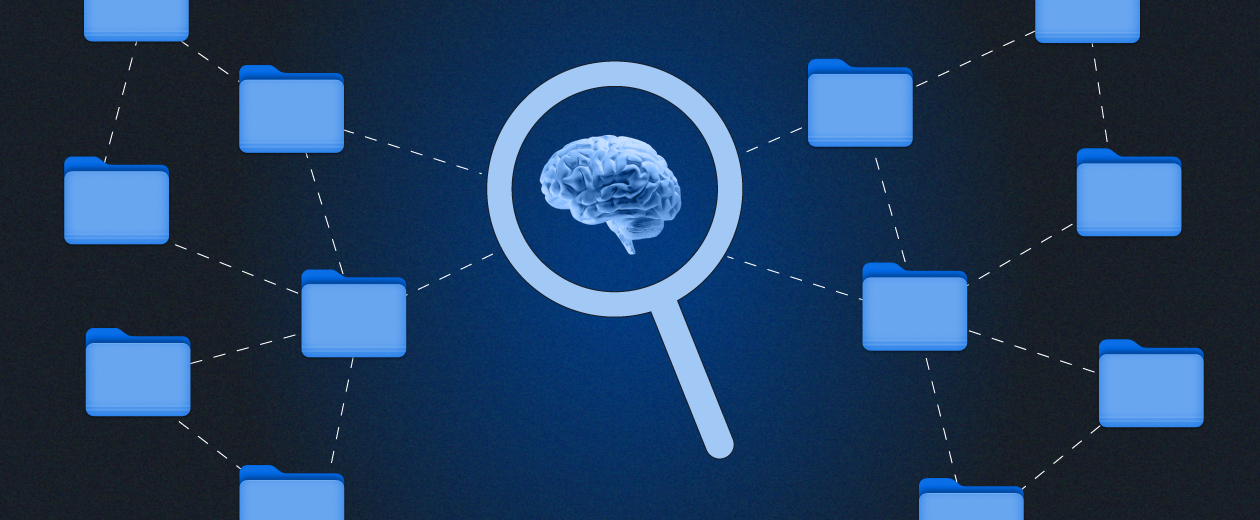
“We use AI in an end-to-end way, augmenting and enhancing the entire storytelling process from ideation through measurement,” said Alexander Blackburn, Director of Communications at Mission North, who works with clients including Axon, Mozilla, and Confluent. “That can include synthesizing large amounts of information like transcripts of earnings calls, executive download calls, and media interviews, but also company narratives, messaging documents, and strategy decks, to develop assets like narrative swim lanes and pitch ideas. Tools like NotebookLM extend this across account teams by connecting our resources and data, while also helping to rapidly bring new team members up to speed.”
In this installment of our AI@MN Series, we sat down with Blackburn to explore how AI is moving beyond simple writing tasks and becoming a core tool for strategic analysis, campaign planning, and long-term content discovery. Below, he shares how the tech is reshaping his everyday work, and why human ingenuity matters more than ever.
We also use AI to pressure test our thinking before anything goes out the door. Custom GPTs or [Google] Gems directed to act as interrogative journalists can help to spot gaps in messaging, allowing us to better prepare executives for the media spotlight.
Custom GPTs or [Google] Gems directed to act as interrogative journalists can help to spot gaps in messaging, allowing us to better prepare executives for the media spotlight.
Mid-campaign, we can feed models media coverage and interview transcripts to understand what hasn’t yet landed, and identify potential follow-on angles. AI-enhanced measurement — assessing how well executives deliver key messages and rapidly analyzing coverage sentiment — creates a real-time feedback loop that sharpens our ongoing work.
Yes, we realized the full potential of AI when we stopped using it simply to write or perform limited tasks and started using it to improve how we think. While AI cannot replace human ingenuity, it can create the conditions that let it flourish. The metaphor I think of is building a fire: AI can help you to build a massive pile of wood, but without the ignition from a match, it’s just a pile of wood.
The metaphor I think of is building a fire: AI can help you to build a massive pile of wood, but without the ignition from a match, it’s just a pile of wood.
AI can help accumulate, analyze, and synthesize information, and there’s enormous value in that. But it can’t decide what matters, or how to bring an idea to life in a genuinely new way. No large language model will ever be trained on the experiences, understandings, and relationships that make humans uniquely brilliant. As AI equalizes access to information, the human aspect becomes the differentiator. Success now depends on how good you are as a strategic communicator.
Effective communication is built on writing, and clear writing is built on clear thinking. The risk with over-relying on AI to both write and think is that those underlying muscles begin to atrophy. If you outsource too much judgment to tools, you fundamentally weaken your ability as a communicator. And when you need to call on your instinct and judgement during a media crisis, in a client presentation, or in a critical interview, you may discover those muscles have weakened at the moment they matter the most.
Journalists are also now hip to AI-written pitches. They receive thousands every single day. Aside from the obvious AI tells, such as excessive em dashes or colons, and the overused “it’s not just about X, it’s about Y,” sentence construction, non-human writing feels fundamentally flat. Reporters are in the business of hunting down fresh information and bringing it to the attention of the wider world. If you're offering them something generated from existing information, it's by definition not news. Besides, communication is built on trust. How can you build trust with a reporter if it's not actually you communicating with them?
On a practical note, AI still fails at a number of key PR tasks, like media list generation. It’s great for simple tasks like checking for duplicate contacts, but if you ask it to suggest new targets, it still often recommends reporters who changed beats or retired years ago. Personalizing pitches with AI still doesn’t feel genuine because it isn't. Also, beware AI’s people-pleasing tendencies. Although it’s improving, it still hypes up bad ideas.
By using AI to analyze transcripts, we recently turned what seemed like a throwaway line about a customer from a CEO’s keynote speech into a successful case study pitch. Gemini was able to identify that line and link it to a deeper detail buried within a product announcement, revealing a potential story angle that would otherwise remain hidden. When you’re working through 20 pages of technical product background, it’s difficult to absorb everything and simultaneously understand how each piece connects. AI helps surface those connections at scale.
By using AI to analyze transcripts, we recently turned what seemed like a throwaway line about a customer from a CEO’s keynote speech into a successful case study pitch.
Aside from its use as a tool, AI is changing the definition of media itself. LLMs are now quasi-media targets, and generative engine optimization (GEO) is becoming a fundamental part of communications campaigns.
But at its core, AI frees us to focus on what adds true value to our clients, and elevates us from operators to storytellers. When used well, it gives communicators more space to be strategic and creative. Remember, ChatGPT is only three years old — we've barely scratched the surface of AI's potential.
September 17, 2026
September 17, 2026
September 15, 2026
September 15, 2026

August 27, 2026
August 20, 2026