
.svg)


September 25, 2026
September 24, 2026

Reading time
July 7, 2026
June 30, 2026
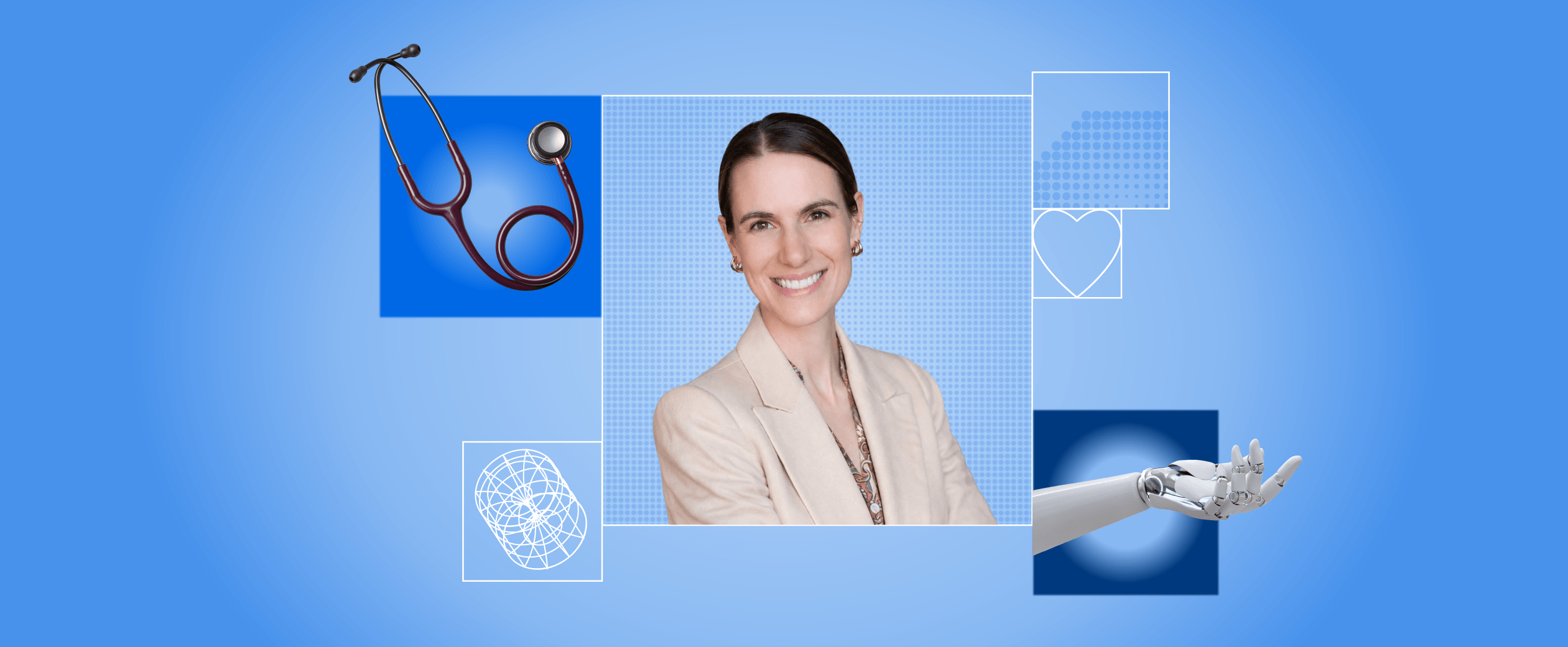
Jennifer Strong has spent her career covering how AI is changing the way we live and work, and building tech podcasts for newsrooms including ProPublica, the Wall Street Journal, and MIT Technology Review along the way. Today she hosts SHIFT, now in its third season and recently renewed for a fourth with the Public Radio Exchange, where she covers the far-reaching impact of technology on our daily lives.
Recently, she joined us for an AMA, where we discussed what’s exciting in AI right now, what's overhyped, and what comes next.
I got my start in radio at a young age, drawn in by the storytelling aspect of community radio. By college I was working in both TV and radio simultaneously, and from there I kicked off my career building shows for mainstream publications. I eventually went independent after realizing I wanted more control over what I built and how long it lived. Now I consult, collaborate, and build on my own terms.
Anything that taps into the shared feeling of “this is a lot” but looks at what I can do now that I couldn't before. The format I always come back to is what I call "Mr. Rogers for Grownups": take people somewhere they can't get into themselves, and teach them something while they're there. I’ve found audiences love when they get access to something they'd never get to go to, see, or learn about otherwise.
The format I always come back to is what I call "Mr. Rogers for Grownups": take people somewhere they can't get into themselves, and teach them something while they're there.
The sentience and AGI conversations. I keep coming back to the notion: why are we trying to build something that mirrors us instead of something that helps us? The saving grace is that so much is happening at once that there are plenty of other conversations worth having.
As you can imagine, everyone has been talking about AI agents nonstop. It doesn't matter if you're talking tech policy, national security, critical minerals, or enterprise AI—everything ties together. That's just how the technology waves roll. We went through the same thing with blockchain, and before that with predictive maintenance, where suddenly everyone from the Air Force to Caterpillar had the same “aha” moment. And agentic AI taking over from plain chatbot conversation is just the latest version of that moment. I think we’ll have it again with quantum.
It doesn't matter if you're talking tech policy, national security, critical minerals, or enterprise AI—everything ties together.
Space tech and healthcare tech are moving incredibly fast. I have tens of thousands of unread pitches about healthcare tech sitting in my inbox that I'm not qualified to sort through on my own. In the past, I had colleagues with that expertise. So like a lot of independent journalists, I gravitate toward the silos I already understand. The exception is where my own background helps, like the intersection of AI and healthcare. For example, I recently worked on a story about hallucinated information showing up in medical records pulled through voice AI tools.
I'm here to draft the first version of history, not to make predictions. But I do think technology tends to become most useful when it becomes normal, even boring.
I'm here to draft the first version of history, not to make predictions. But I do think technology tends to become most useful when it becomes normal, even boring. For example, nobody thinks about the power grid until it fails. Eventually, AI will be like that too. And I think that's worth documenting now, before we normalize it, because we have a tendency to just move on and lose the record of how much actually changed.
September 25, 2026
September 24, 2026
September 25, 2026
September 17, 2026
September 25, 2026
September 15, 2026