
.svg)



October 22, 2026
October 22, 2026

Reading time
March 16, 2026
March 12, 2026
Our latest Brand Expectations Index makes one thing clear: the trust playbook many companies are still running is outdated.
Visibility isn’t the same as credibility. Speed can’t stand in for leadership. Title doesn’t replace expertise.
In November 2025, we surveyed 1,549 U.S. adults to evaluate, for the third year in a row, how trust is changing: how we earn it, how to lose it, and what AI means for it. The audience included 1,049 general respondents and 500 knowledge workers: professionals with specialized expertise, judgment, or decision-making roles.

So in 2026, what should communicators do differently? Below are 10 clear, actionable shifts grounded in the data from our latest survey.
Only 24% of our general population respondents—and 44% of our knowledge worker subset—say frequent CEO media presence increases trust. Executive visibility ranks last among the trust drivers we tested.
What to do now: Move beyond visibility for its own sake. Pitch fewer, more substantive executive placements. Elevate subject-matter experts in addition to CEOs. Measure the effectiveness of this shift by tracking influence and credibility, not volume.
A majority of respondents—57% of the general respondents and 67% of knowledge workers—believe it's better for leaders to say nothing in a crisis than to risk being wrong.
What to do now: Rebuild crisis playbooks around "verify first" protocols. Teach executives that waiting is tactical discipline, not weakness. Signal investigation and ownership before amplification.
73% of the general population and 67% of knowledge workers say trust declines if companies use undisclosed AI-generated executive messaging.
What to do now: Disclose AI involvement in executive content. Avoid AI avatars in sensitive announcements. Prepare language in which AI uses signals innovation, not evasion.
Among knowledge workers, 38% prefer hearing from subject-matter experts on technical topics, compared to just 24% who expect to hear from the CEO. Only about one in five respondents expect the CEO to speak during disruptions like service outages or technical issues.
What to do now: Map your “expert bench,” get them media trained, and build visibility plans for them. For operational and technical stories, pitch the leader closest to the facts. Position CEOs as owners of accountability, while other experts lead on explanation and execution.
In a controlled experiment, where separate groups evaluated the same crisis statement attributed to either "John Reed, CEO" or "Jessica Reed, CEO," differences in trustworthiness and effectiveness were negligible. Emotional leadership is not meaningfully gendered.
What to do now: Prioritize clarity over performative authority. Coach leaders to pair decisiveness with empathy. Retire tone debates that distract from proof.
56% of respondents expect leaders to appear on broadcast news, but far fewer say that doing so actually increases trust. Long-form platforms like YouTube, podcasts, and LinkedIn generate stronger trust returns, especially among knowledge workers.
What to do now: Use earned media for legitimacy and scale, then follow with long-form platforms that demonstrate thinking and accountability. Design visibility arcs, not isolated appearances.
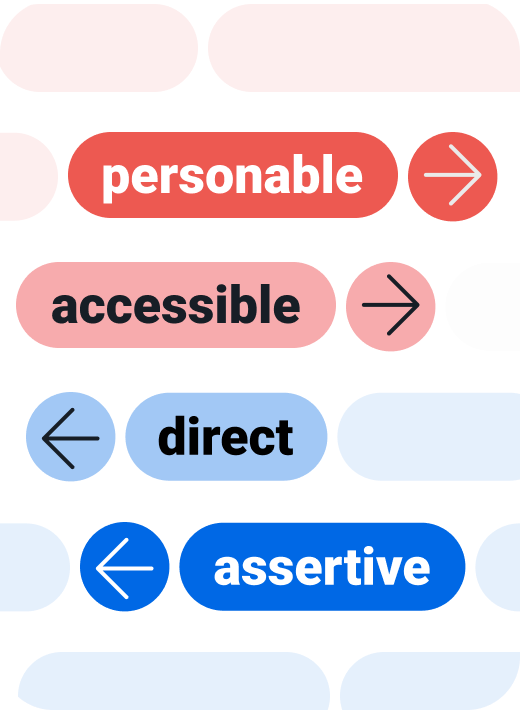
Gen Z shows a +7 point trust preference for "personable and accessible" executive communication (49%) over "direct and assertive" tone (42%). They also expect leaders to meet them where they are: 47% of Gen Z and 42% of Millennials expect to see leaders on YouTube. Trust follows: 38% and 37%, respectively, say those appearances increase trust. Older generations show single-digit gains.
What to do now: Segment channel strategy by generation, and match tone to platform. For younger audiences, credibility is built through conversational formats: YouTube explainers, LinkedIn posts, and live Q&As.
During periods of uncertainty, trust increases when leaders demonstrate commitment to employees (44%), personable communication (43%), environmental responsibility (43%), clear policy positions (42%), and social responsibility (42%). All of these consistently outrank executive visibility.
What to do now: Integrate visible values into messaging during volatility. Communicate employee impact, policy clarity, and social responsibility explicitly. Avoid vague positioning statements.
Small businesses (68%), higher education (60%), and healthcare (57%) remain the most trusted institutions—and those rankings have held steady across three years of tracking. Trust in the federal government lags at 28%, compared to 37% for state and local government.
What to do now: Where possible, emphasize proximity, community impact, and tangible action. National brands can build trust by demonstrating local accountability and people-centered leadership.
Across every segment, taking care of customers and taking responsibility for missteps builds trust: protecting customer data builds trust (66% general respondents / 75% knowledge workers). So does admitting mistakes and outlining corrective steps (66% / 75%); listening and responding to concerns (61% / 75%); and accepting responsibility even when fault is shared (69% / 75%).
What to do now: Ensure that what's said, wherever it's said, demonstrates responsibility over rhetoric.
Across all ten insights, one theme emerges: trust is built on substance, transparency, and demonstrated competence—not on frequency, title, or speed. The data gives communicators permission to do what many already know is right; say less, mean more, and prove it.

October 15, 2026
October 15, 2026
October 7, 2026
October 2, 2026