.svg)



October 15, 2026
October 15, 2026

Reading time
December 18, 2025
December 4, 2025
Mission North’s AMA series gives communicators the chance to hear directly from leading journalists about what shapes their coverage, the elements of a great story, and how PR teams can add the most value to industry conversations.
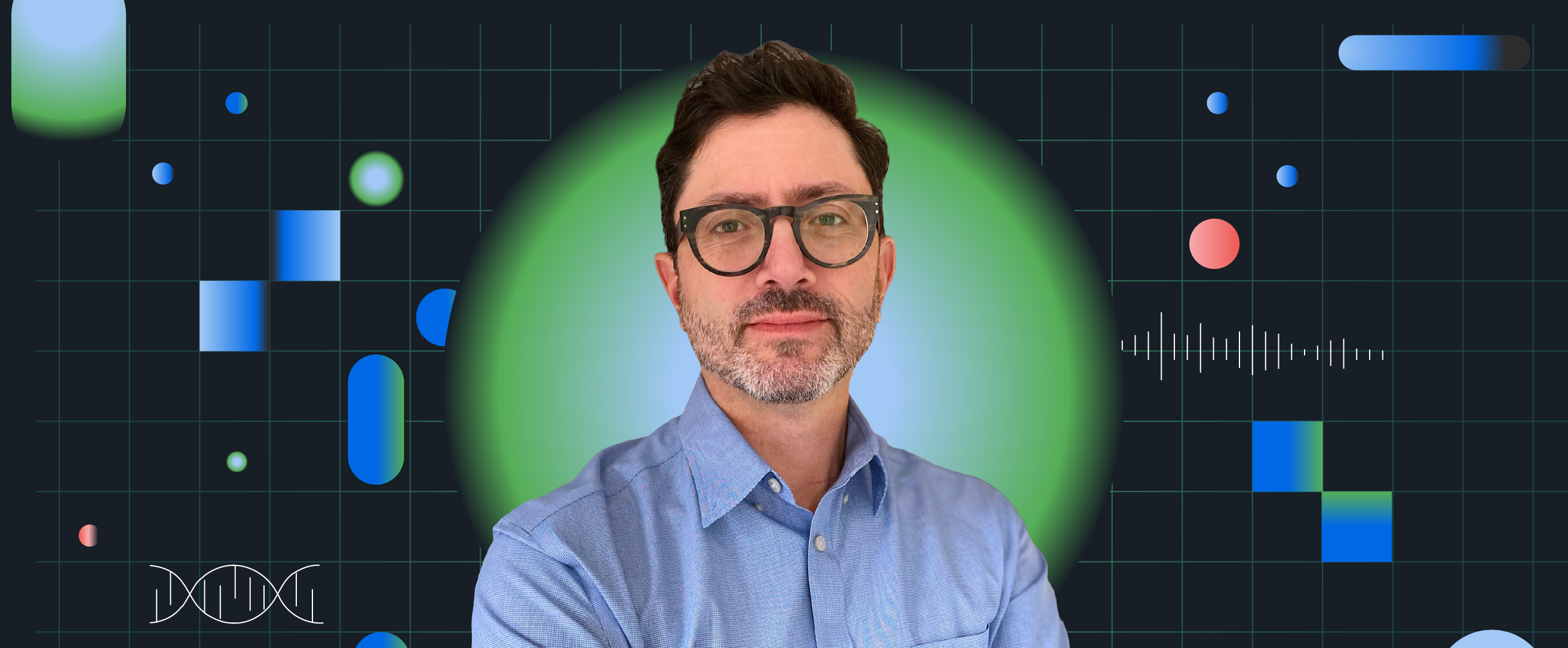
We recently spoke with David Wild, Senior Reporter at In Vivo, a Citeline publication that focuses on biopharma strategy and innovation. David covers everything from clinical development to the growing role of AI in drug discovery, while the publication’s Rising Leaders series profiling emerging executives has become essential reading. When he's not covering the business of medicine, you can catch him behind another kind of keyboard with Pounds of Sin, his Grateful Dead tribute band, who regularly light up Toronto's Monarch Tavern.
We were grateful for David’s time – here's what he shared about his approach to journalism, the scientific areas commanding his attention, and how communications professionals can work more effectively with reporters.
In Vivo's role is to help biopharma executives understand the strategy behind innovation – not just the science. We look at the forces shaping the business of biopharma: how drug development, regulation, and commercialization come together. Our readers are the people making decisions about where to invest, which partnerships to pursue, and how to position their companies in a rapidly evolving landscape.
Every other month, we organize our coverage around a central theme within the industry. Our big December Outlook issue is a chance to look ahead to the coming year. I'm also hoping to reignite a spinoff project called Inflection to Insight that would look at case studies of failures in biopharma — whether clinical trials, partnerships, or launches — speaking with key players involved in those cases and finding valuable lessons.
Lately, cardiometabolic diseases are the hottest area — GLP-1s have really changed the game. I'm also watching inflammation, immunology, and the immuno-neurology-inflammation (INI) space closely. CNS disorders remain a significant focus as well, and I'm increasingly interested in cell and gene therapy. This year’s Cell & Gene Meeting on the Mesa was a great opportunity to learn about the most cutting-edge developments in that field.
Later-stage research is always more compelling – but I don’t discount early-stage stories. For that, I'm drawn to work that has strong financial backing, a credible academic foundation, high-profile partnerships, or industry leadership implications. These early indicators tell you where the smart money is going and what could reshape the competitive landscape.
Later-stage research is always more compelling – but I don’t discount early-stage stories.
BIO and Biotech Showcase are two of the best places to take the pulse of the industry, particularly for biotech. Some conferences have lost relevance over the years, but those two keep evolving with the science and remain places where real news breaks and decision-makers have substantive conversations. I’ll also be at Meeting on the Mesa, the American Academy of Neurology annual conference, and the AI in Drug Discovery and Development Summit.
AI has been written about ad nauseam, but I'll admit that I'm still a sucker for a good AI pitch.
What makes AI interesting in 2025 is no longer the technology itself, but who's using it and what it's actually achieving. But a small startup with an AI platform needs a serious, high-profile partner or a standout use case to break through. And with big pharma, I'm looking for examples of AI actually changing outcomes – not just speeding up a workflow or making incremental improvements.
The challenge is that while the potential is great, the results aren't always there yet. Show me outcomes, not just promises.
What I don't love is when I get pitched talking points from an executive who has no idea that they're being pitched or how they are positioned. When you get on a call with them, you can tell that their views don’t match the pitch, and it wastes everyone's time. The disconnect between the PR team and the spokesperson undermines the entire effort.
The best PR pros understand my audience – people who care about business strategy and science. They know what makes a story and bring me genuinely newsworthy information before I have to hunt for it. They help me get to the story faster without overselling it. Be real, be clear, and make sure the person you're pitching actually has something to say.
If you can distill a complex concept into a visual that executives actually understand, that's gold.
Also – I'm a huge fan of visual storytelling and infographics. If you can distill a complex concept into a visual that executives actually understand, that's gold. I'd love to see more pitches that think visually – not just in words. If the data tells a compelling story visually, absolutely pitch it to me.
Keep it concise and relevant to what I actually cover. Show me why this matters to biopharma executives making strategic decisions, not just that it's scientifically interesting. Anchor every pitch in real data, funding, or partnerships. And avoid corporate jargon. Authenticity wins.
One of my favorite stories to write was a piece on the growing possibilities the metaverse has to offer medical research — it was weird, speculative, and totally outside the box, which made it fun. On a similar note, if I could write one dream piece, it would be a longform story for somewhere like The New Yorker on George Church, the Harvard geneticist and synthetic biology pioneer who's been at the forefront of gene editing and de-extinction research. He rethought what's possible in biotechnology. It's one of those topics that's equal parts science, philosophy, and imagination. The future of biology is being rewritten there, and I'd love the space to really explore that intersection of ambitious science and ethics.
At Mission North, we work with innovative companies to build, protect and renew their impact. Our Life Sciences and Health practice works with leaders like Antheia, Corner Therapeutics, LifeStance Health, Virta Health, and Somite AI – who are solving today’s most urgent health challenges and safeguarding the future with science.
October 15, 2026
October 15, 2026
October 7, 2026
October 2, 2026

October 7, 2026
September 24, 2026