
.svg)



September 17, 2026
September 17, 2026

Reading time
June 25, 2026
June 23, 2026
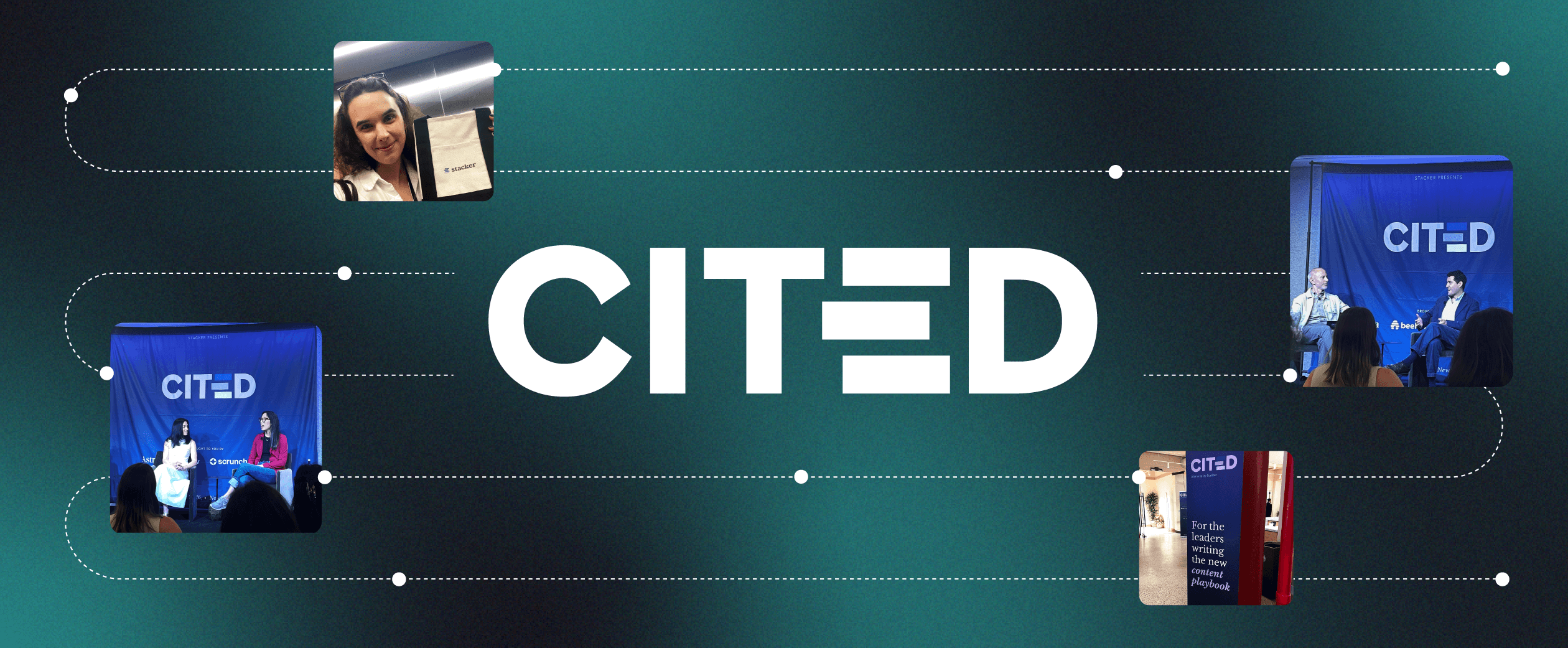
Last week, I joined 200 content leaders at Stacker CITED 2026 to discuss something that’s at the top of our collective minds: how to improve AI visibility, or help your brand show up in large language models (LLMs) with the right messages.
As LLMs replace traditional search engines, this has become a hot topic in communications. I walked away from the Stacker CITED event with a few actions that comms leaders can take right now to tell their stories for LLMs without leaving behind human audiences.
The volume of AI visibility research, and tools to measure it, is overwhelming. If you feel inundated with data or don’t know where to begin, you’re not alone.
You can start small, but do start somewhere. A good first step is to understand how your brand shows up in LLMs across three metrics: visibility, sentiment, and accuracy. In other words, does it appear at all? What do LLMs say (and not say) about it? Are there misperceptions or outdated information?
Learning what LLMs understand about your brand right now creates a benchmark to inform how you should change it. What messages are already present that you want to reinforce? Is anything inaccurate? What do you want to add?
Learning what LLMs understand about your brand right now creates a benchmark to inform how you should change it.
As you consider these questions, think about how your competitors may be approaching them too. If a potential buyer searches an LLM for information about your industry, what can you say that your competitors can’t? This could look like producing content that amplifies proprietary data, leans into your company’s unique leadership, or explains the complexities of what makes your product different.
Comms leaders should have a big hand in optimizing AI visibility as 84% of AI citations are earned media, and LinkedIn is an increasingly important source for the models. But technical elements like website formatting also influence AI visibility. For example, separating content on a newsroom or blog into “buckets” signals to LLMs that a brand has authority on those distinct topics.
AI visibility strategy shouldn’t fall solely on comms leaders’ shoulders, but they are well- positioned to lead the charge within their organizations. They can form cross-functional teams early to educate their marketing and technical peers, and build plans together.
AI visibility strategy shouldn’t fall solely on comms leaders’ shoulders, but they are well- positioned to lead the charge within their organizations. They can form cross-functional teams early to educate their marketing and technical peers, and build plans together.
These teams can also create a strong, cohesive case for business leaders about the importance of this work.
GEO best practices are still being written (and rewritten), and the sources LLMs cite can shift week to week. It’s easy to feel like you’re behind the curve, but if you’re measuring how your brand shows up, experimenting to improve it, and communicating the value of this work to leadership—you’re doing great!
Build narrative consistency. This is not a new idea for comms leaders, but it matters now more than ever. Reinforce your core messages across all channels so they’re easy for LLMs to understand.
As you build an AI visibility strategy, consider these best practices:
AI visibility strategy and human-centered communications go hand in hand. Read how Mission North approaches storytelling for both people and LLMs.
September 17, 2026
September 17, 2026

September 15, 2026
September 15, 2026

August 27, 2026
August 20, 2026