
.svg)



October 7, 2026
October 6, 2026

Reading time
July 14, 2026
July 14, 2026
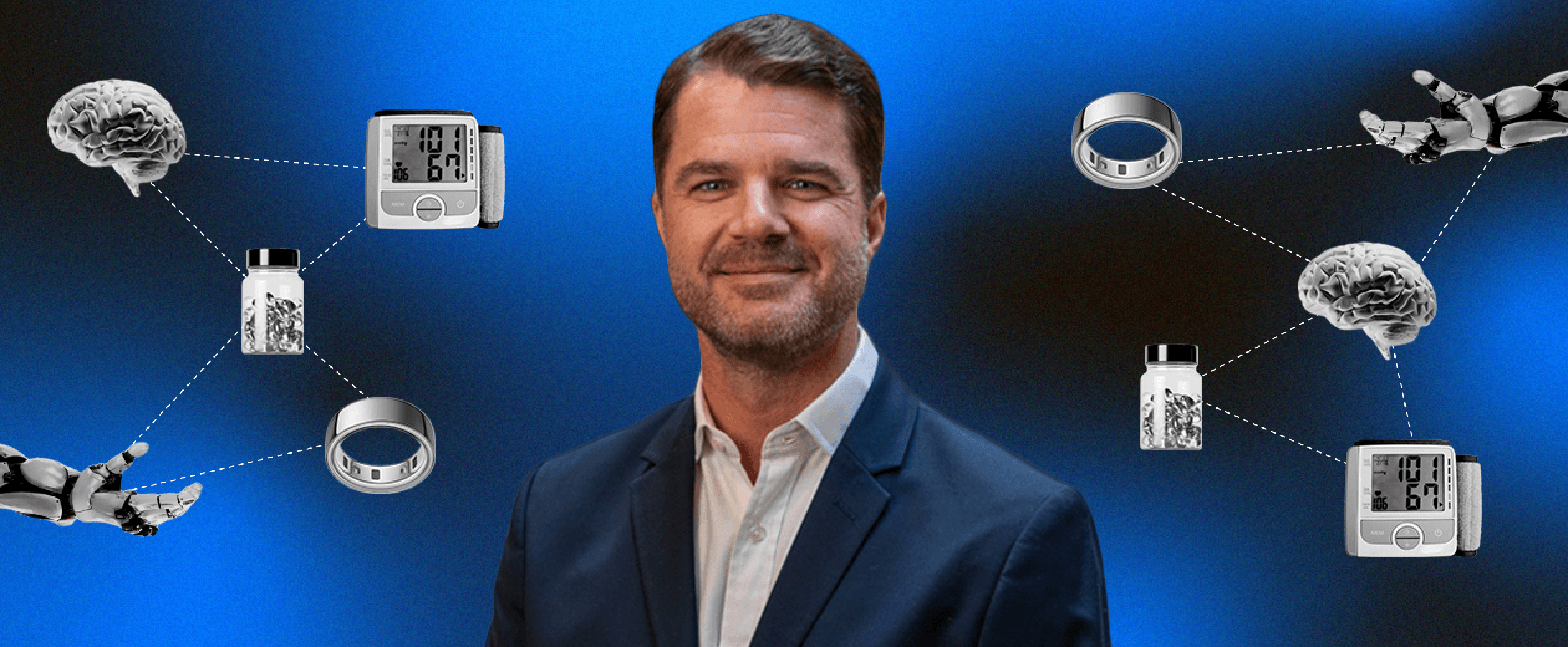
"Healthcare is broken as hell." That’s how Alex Hunter, Mission North’s new EVP of Health and Innovation, started off a chat we had recently. And he should know after two decades of helping some of the most prominent technology and healthcare companies in the U.S. earn trust among a skeptical public. From his time at Palm and HP to founding The Bulleit Group and then leading Jarrard’s Health Technology Practice, Hunter has strong opinions on the state of PR in the industry and how to help people understand how new technologies can benefit their health.
Our conversation has been edited for clarity and length.
Three things are converging. AI has matured in healthcare from being an interesting concept into something people actually use to improve care delivery. At the same time, healthcare organizations are under financial and workforce pressure, running on thin margins with a caregiver shortage. Consumers now expect healthcare to be as personalized and seamless as everything else in their lives. Innovation that used to happen in silos is breaking down as providers, payers, employers, and technology companies solve problems together. Successful companies build trust and clearly communicate how their technology improves patients’ lives.
Successful companies build trust and clearly communicate how their technology improves patients’ lives.
Leading with the technology instead of the problem it solves. Founders spend years building incredible products, so their instinct is to talk about the model, the platform, the algorithm. But customers, investors, and media want to talk about outcomes. The companies that stand out solve real problems for people: doctors who are burned out and the patient who waited six hours for care. Once people understand the problem, they're more interested in how the technology solves it.
That was a reaction to a Bloomberg article on the public backlash to AI. Framing it as a communications issue assumes the public is skeptical because of weak storytelling, and that better messaging would address it. It won't. It's not a PR problem; it's a usage problem. You can't fix that with better positioning. Roughly half of people in the U.S. still haven't used AI at all, so what looks like skepticism is really a lack of direct experience. For those who haven't touched the technology, it feels abstract, overhyped, maybe even a little shady. Once people actually use it to solve a real problem, the perception shifts fast.
It's not a PR problem, it's a usage problem. You can't fix that with better positioning.
Because technology feels tangible and culture doesn't. It's easy to buy software. It's much harder to help people change how they work. The organizations making real progress are investing in training, leadership engagement, and change management, not just rolling out licenses. This is a change management effort, not a technology adoption effort. People need permission to experiment and permission to fail, along with confidence that AI is there to augment their work, not replace them.
The shift from episodic to continuous healthcare. For decades, care has been built around snapshots, such as an annual physical, a lab test, a doctor's visit. Wearables are changing that. Ōura is a strong example. It started as a sleep and recovery product and has evolved into a broader continuous health platform, connecting biometric data with healthcare partners to deliver services like virtual care and personalized health support directly within the app. Its symptom radar feature can flag that you're about to get sick before you feel it, based on patterns in your biometrics. The value isn't the data point. It's using that information to catch something earlier and intervene before it becomes serious.
Strategic partners who understand healthcare and technology equally, and not just at a surface level. Healthcare and technology are two very different industries when you consider the market dynamics. Technology is often driven by speed, consumer demand, and the best product winning, while healthcare is shaped by regulation, complex buying decisions, entrenched workflows, and the need for trust among multiple stakeholders. Building a great digital health or AI product isn't enough. Someone still has to implement it and pay for it. An integrated approach across executive visibility, thought leadership, crisis management, and digital strategy is necessary.
That better technology automatically wins. In tech, the best product usually rises to the top. Healthcare doesn't work that way. You can build a world-class product, but if it doesn't fit clinical workflows, if physicians don't trust it, if reimbursement isn't aligned, adoption stalls no matter how good it is. Healthcare innovation is never just a technology challenge. It's a trust challenge, a behavior change challenge, and a communications challenge.
Healthcare innovation is never just a technology challenge. It's a trust challenge, a behavior change challenge, and a communications challenge.
That we used technology to make healthcare more human. That we didn't adopt AI because it was the shiny new thing, but because it gave clinicians more time with patients, improved access to care, and reduced friction in the system. I hope we look back on this as one of the more important periods of transformation in U.S. healthcare history.

October 7, 2026
October 2, 2026

October 7, 2026
September 24, 2026

September 25, 2026
September 17, 2026
