
.svg)


October 7, 2026
October 6, 2026

Reading time
July 10, 2026
July 9, 2026
When it comes to adopting AI, the transition from individual experimentation to company-wide alignment is rarely a straight line. We've been at the forefront of this transition since we wrote our AI First Principles in 2023, before most agencies in our space had touched the topic. As the technology changes and our own usage matures, we continue to update and refine our approach, and now we help clients do the same.
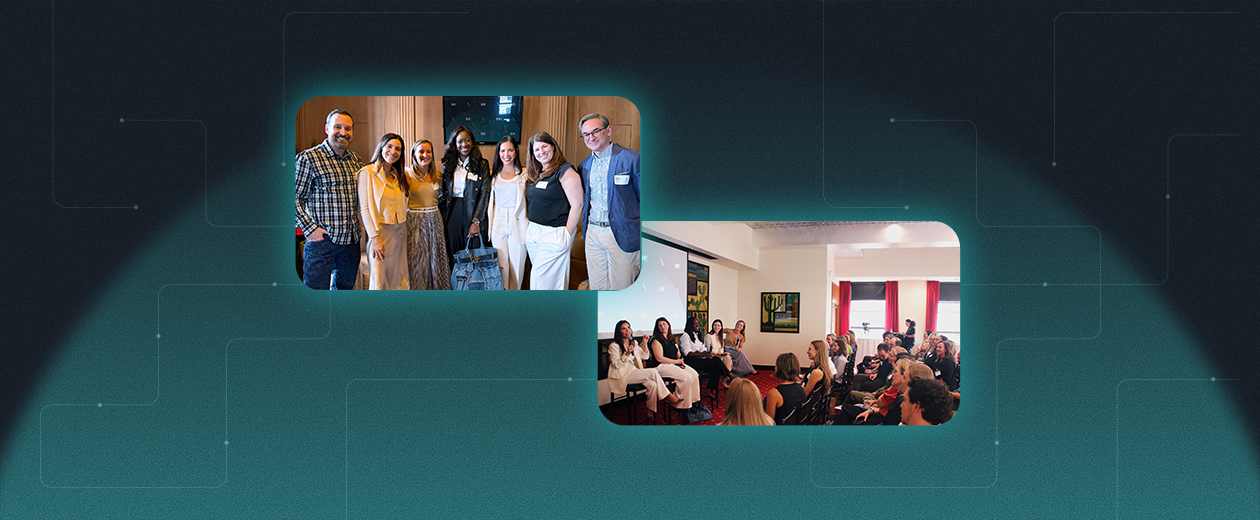
Our team has been busy. We’re leading in-person and virtual workshops, helping global comms teams put AI guidelines in place, and turning our best use cases into live demos for how today’s comms leaders can put AI to work.
AI maturity looks different at every company. In 2026 alone, we’ve sat down with teams who have been testing tools since ChatGPT launched in 2023 as well as others who still don’t have basic guidance on using AI platforms at work. No two teams start from the same place, so we build each workshop around where that team actually is.
I think being ahead of the curve is something that would be interesting to push for… rather than just looking at the limitations of our current access. — Exec sponsor
Here’s a look at what we’ve learned.
For one prominent health client, the session had two goals. First, discuss where the team stood with AI day-to-day. Second, build an understanding of the current state of AI in communications, from generative AI engine optimization (GEO) to the smaller tools and habits that shape daily work. We walked through the evolution from search engine optimization to GEO, showed how their brand scored across different AI platforms in categories core to their business, and used those findings to spark a conversation about what an AI-native communications program could look like. These insights allow us to tie hard data to our strategic recommendations in a way we have never been able to do before.
I plan to tap in and try using AI more in general, and take some of the things I learned and immediately try applying them. — Workshop participant
One recent engagement was with a global interactive entertainment brand to help their communications and content organization of ~50 people use AI responsibly and consistently. We embedded with the team for a five-month project to audit the team’s current AI habits, uncover core roadblocks and skills they wanted to learn, and build a tailored AI workshop with materials directly tied to their business and communications goals.
We started with an internal survey to benchmark exactly how they were using AI. While individual usage was climbing, that growth was matched by deep institutional hesitation. Team members voiced clear concerns and barriers that were holding them back from engagement, including accuracy, brand exposure, and skill atrophy.
.jpg)
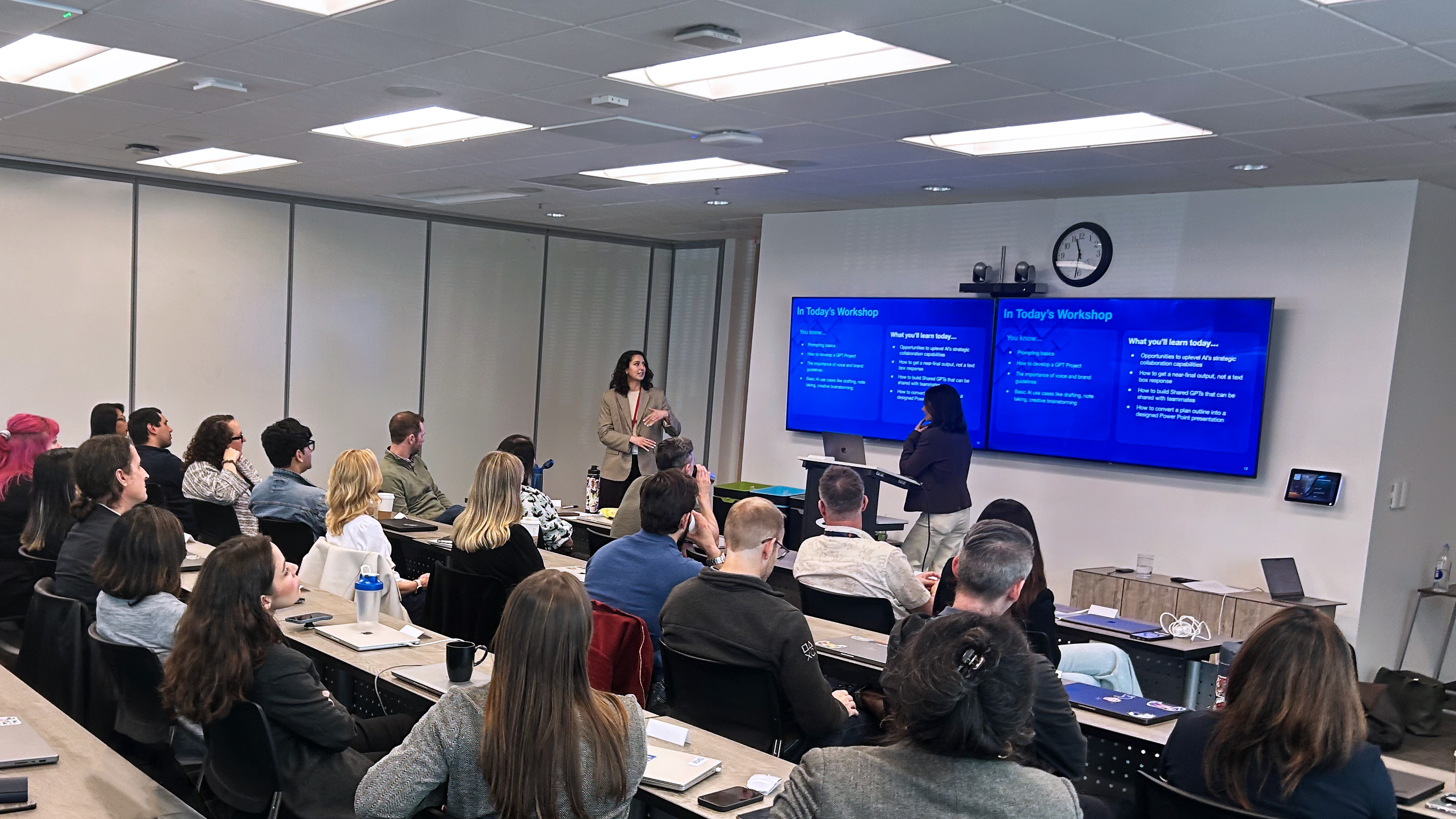
With this knowledge in hand, we worked closely with the clients to develop a comprehensive set of AI Guiding Principles that aligned with the company’s corporate compliance policies and approved AI tools. However, we know from our experience that principles alone won’t change behavior. Once the guardrails were finalized, we brought the strategy to life and led an in-person workshop focused on live technical tracking, prompt pressure-testing, and collaborative breakout groups.
We graduated the team from simple, single-line queries and text-box replies to advanced prompting mechanics built for their work. After the session, we asked the team what they found the most valuable:
I plan to build a small library of reusable prompts for these use cases so I can apply them consistently, improve their quality over time, and make AI a more reliable part of my day-to-day work. — Workshop participant
The most successful AI transformations begin with a problem worth solving. For your organization, that might look like spending hours every week compiling a media coverage report that leadership rarely reads, getting bogged down in repetitive tasks that keep your team from higher-value work, or spinning your wheels brainstorming ideas that never quite get where they need to go.
We start by looking directly at those pain points. When you treat AI as the answer to a problem people already want solved, it stops feeling like an abstract mandate. The conversation shifts from "Why are we using AI?" to "Is there a way we can automate this?"
Every engagement we lead is tailored to the realities of each team's day-to-day work. These sessions have brought real value to our clients. We've also learned that the structure of the workshop matters as much as the tech we teach.
The sessions give teams a rare, intentional space to take a step back, share new learnings with colleagues, and align on how to navigate the AI shift together. More than anything, this environment helps cultivate a much-needed culture of honesty around AI. People can open up about how technology can amplify daily work, admit its limitations, and laugh at the inevitable facepalm moments along the way.
Each training experience teaches us something new, and it's rewarding to watch teams leave with the confidence to put AI to work in ways that are practical, responsible, and immediately useful.

October 7, 2026
October 2, 2026

October 7, 2026
September 24, 2026
September 25, 2026
September 17, 2026
